Artificial Intelligence (AI)
If you are not aware of the AI boom currently going on, or are not already participating in it in any way, then you might be living under a rock. At this point, artificial intelligence is almost ubiquitous. People and organizations are using it to write content, analyze data, automate tasks, design products, improve customer service, and solve complex problems, among many other things.
While the technology is still in its early stages and continues to evolve, it has already shown enormous potential. Let’s take a closer look at some of the key ways it is shaping modern businesses today.
Enhanced Customer Experience
Many businesses now use AI-powered chatbots and virtual assistant systems to improve customer interactions. These tools provide faster responses, personalized suggestions, and round-the-clock support, which helps companies build stronger relationships with their customers.
Automation of Routine Tasks
Artificial intelligence also allows businesses to automate repetitive and time-consuming tasks such as data entry, scheduling, report generation, and inventory tracking. This frees up employees to focus on more creative, strategic, and value-driven activities.
Data Analysis for Improved Decision-Making
AI systems can process and analyze massive amounts of data in a fraction of the time it would take humans. Through data processing and analysis, AI can then identify patterns, trends, and correlations. These can provide insights that help business leaders make more informed and strategic decisions, like making smarter investments and better market predictions.
Marketing and Sales Optimization
Businesses can use AI to analyze things like customer behavior and preferences. With this information, they can then create targeted marketing campaigns, which can ultimately boost sales performance.
Operational Efficiency and Cost Reduction
Through detailed analysis, business owners can also leverage AI to identify areas of their operations that could be run more efficiently or aspects where costs could be reduced. This will help reduce waste and ensure better use of equipment and resources.
Cybersecurity
Today, the internet has become central to how most businesses operate. And as businesses move more of their operations online, they become increasingly exposed to online/cyber threats such as hacking, data breaches, identity theft, online fraud, and malware attacks. This growing exposure has made online security, or simply cybersecurity, a major priority for modern organizations. As a result, the need for strong cybersecurity measures has become more important than ever.
Here are some of the key ways cybersecurity is shaping modern businesses.

Protection of Business Data
Many businesses handle large amounts of sensitive information, including customer details, financial records, and internal documents. Cybersecurity systems help protect this data from being stolen, altered, or misused.
Prevention of Financial Loss
Cyberattacks can lead to serious financial damage through fraud, system shutdowns, and recovery costs. By investing in cybersecurity tools such as firewalls, encryption, and monitoring systems, businesses can reduce the risk of costly attacks and protect their revenue.
Building Customer Trust and Confidence
Good cybersecurity measures can help businesses earn customers’ trust. Customers are more likely to do business with companies that take their online safety seriously. So, when businesses show exactly that, it builds confidence and strengthens long-term relationships with their customers or clients.
Support for Remote and Digital Work
With more employees working remotely and using cloud-based systems, organizations must enable authorized individuals (employees) to easily access systems while also preventing unauthorized access. Cybersecurity helps ensure this. The right systems in place will ensure that workers can safely connect to company systems without being exposed to external threats.
Compliance with Regulations and Standards
Many industries now have rules and regulations about how data should be handled and protected. Cybersecurity measures help businesses comply with these requirements, avoid legal penalties, and maintain professional standards.
Cloud Computing
In simple terms, cloud computing is the technology that enables businesses to use software services, store information, and process data online. Previously, businesses only relied on local storage and physical servers to store their data and run their computer software. This means they would save their files on office computers, external hard drives, or in-house servers. And to access them, they would have to be physically present at the workplace.
Today, cloud computing has completely changed that approach. Instead of depending only on local devices and on-site infrastructure, businesses can now store their data, run applications, and manage operations over the internet. And this has offered more flexibility, convenience, and scalability, among other benefits.
Here are some of the key ways cloud computing is shaping modern businesses today.
Improved Collaboration and Remote Access
With cloud-based systems, employees can access files, applications, and work tools from different locations. This makes teamwork easier, supports remote work, and ensures that staff can collaborate in real time, regardless of where they are.
Cost Efficiency and Reduced Infrastructure Expenses
One of the biggest advantages of cloud computing is cost savings. Businesses no longer need to spend heavily on purchasing servers, storage devices, and networking equipment. Instead, they pay only for the resources they use. This reduces upfront investment and makes advanced technology more accessible, especially for small and medium-sized businesses.
Scalability and Business Flexibility
Cloud platforms allow businesses to easily increase or reduce their computing resources based on demand. During busy periods, companies can scale up their systems, and during slower periods, they can scale down. This flexibility helps organizations manage growth without unnecessary spending.
Data Backup and Disaster Recovery
Cloud services automatically back up important data and store it in multiple locations. In case of system failure, hardware damage, or unexpected disasters, businesses can quickly recover their information. This reduces downtime and protects valuable business records.
Enhanced Security and System Reliability
Many cloud providers invest heavily in advanced security systems, regular updates, and continuous monitoring. While cybersecurity remains a shared responsibility, cloud platforms often offer stronger protection and more reliable infrastructure than many businesses can afford on their own.
Faster Deployment of Applications and Services
Cloud computing allows businesses to set up and deploy new software, platforms, and services quickly. Instead of spending weeks installing and configuring systems, companies can get started within hours or a day.
Automation
In simple terms, automation refers to the use of technology to perform tasks and processes with minimal human involvement. Instead of relying on employees to manually handle every step of a process, businesses can now use automated systems to complete tasks faster, more accurately, and more consistently.
You would often see automation associated with artificial intelligence, and while there is such a thing as AI-powered automation, automation on its own is also a broad and independent technology. Long before AI became popular, businesses were already using automated systems to handle repetitive tasks, improve efficiency, and reduce human error.
However, automation has become more advanced and accessible than before. And today, businesses of all sizes use automation tools.
Here are some of the key ways automation is shaping modern businesses today:
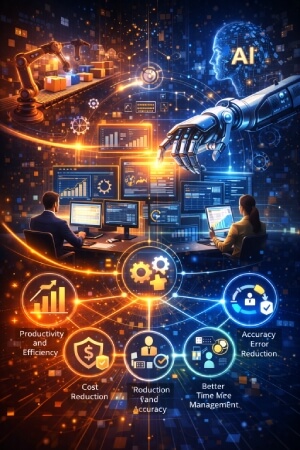
Increased Productivity and Efficiency
Automation allows businesses to complete tasks much faster than manual methods. Processes such as order processing, billing, scheduling, and reporting can now be handled automatically. This reduces delays, minimizes errors, and ensures that work gets done on time.
Reduction of Operational Costs
By automating routine activities, businesses can reduce the need for excessive manual labor and lower operational expenses. While there may be an initial investment in automation tools, the long-term savings often outweigh the costs.
Improved Accuracy and Reduced Human Error
Manual processes are more likely to result in mistakes, especially when tasks are repetitive or complex. Automated systems follow predefined rules and procedures, which help reduce errors and improve the overall quality of work.
Better Time Management for Employees
When routine tasks are automated, employees have more time to focus on important activities such as planning, creativity, customer relations, and problem-solving. This leads to better use of human skills and improved job satisfaction.
Support for Business Growth and Scalability
As businesses grow, their operations become more complex. Automation makes it easier to handle increased workloads without significantly increasing staff numbers.
Data Analytics
In any digital business environment, data is being generated continuously. Every customer interaction, online transaction, website visit, social media engagement, and business process produces valuable information. However, this data on its own has little value unless it is properly collected, analyzed, and interpreted. This is where data analytics comes in.
Data analytics involves examining raw data to uncover patterns, trends, and insights that support better decision-making. It’s a technology that has existed for quite some time. However, advances in technology have created more powerful tools, which have now made data analysis a whole lot faster and more comprehensive.

Here are some of the key ways data analytics is shaping modern businesses today.
Better Decision-Making
Data analytics helps business leaders make informed decisions based on real evidence. For example, analysis of data like sales trends, customer behavior, and market conditions can help businesses choose better marketing and sales strategies.
Improved Understanding of Customers
Through data analysis, businesses can gain deeper insight into customer preferences, purchasing habits, and feedback. This will then enable them to tailor their products, services, and marketing efforts to better meet customer needs and expectations.
Performance Monitoring and Evaluation
Analytics tools enable businesses to track key performance indicators such as revenue, productivity, customer retention, and operational efficiency. This makes it easier to evaluate progress, identify weaknesses, and improve overall performance.
Cost Control and Resource Optimization
Data analysis also allows businesses to identify areas where resources are being wasted or underutilized. They can then improve budgeting, reduce unnecessary expenses, and make better use of available assets.
Other Technology Trends Worth Watching
Beyond the five major technologies discussed in this article, there are several other important tech innovations that are gaining attention and adoption across different industries. They include:
- Blockchain Technology: A digital system for recording transactions.
- Internet of Things (IoT): This refers to the network of physical devices such as machines, sensors, vehicles, and appliances that are connected to the internet and can collect and share data.
- Sustainability Technology: Tech hardware and software that help enhance sustainability efforts, such as reducing carbon footprints.
- Augmented Reality (AR) and Virtual Reality (VR)
- Robotics
What Businesses Should Consider Before Adopting Any New Technology
While the implementation of modern technologies can, to a large extent, enhance business performance, improve efficiency, and support long-term growth, it is important to understand that not every business is the same. Companies differ in size, structure, budget, industry, and operational needs. This means that the type of technology adopted, the level or scale of implementation, and even the method of integration will vary from one business to another.
Because of these differences, adopting new technology should not be based on trends or pressure alone. Instead, it should be guided by careful planning and practical evaluation. Before investing in any new digital tool or system, businesses need to consider how it fits into their existing operations and long-term goals.
Here are some important factors every business should consider before implementing any new technology.
- Business needs and objectives: Businesses must first identify the specific problems they are trying to solve or the goals they want to achieve, and the chosen technology should directly support these objectives.
- Cost and Return on Investment (ROI): The cost of implementation must be determined, and the expected benefits must be carefully evaluated to determine whether they justify the total cost.
- Technical infrastructure and compatibility: Businesses need to assess whether their current hardware, software, and network infrastructure can support new tools.
- Employee skills and training requirements: Companies should consider whether their staff have the necessary skills and whether additional training will be required.
- Scalability and future growth: Companies should consider whether the particular technology to be implemented can handle increased workload, more users, and expanded operations in the future.
Innovation With Intention
Technology will continue to evolve, bringing new innovations year after year. While many of the tech advancements will be highly beneficial, others may not deliver the impact they promise.
The key takeaway is that, although modern technologies offer significant advantages, their real value depends on how well they fit a business’s specific needs, goals, and capacity. Businesses that therefore take the time to understand these technologies, assess their practical impact, and adopt them carefully are far more likely to gain a competitive edge.